
What Is Included in an EICR Report? An EICR report records the condition of a property’s fixed electrical installation, listing inspector and client details, inspection scope, circuit identification and individual test results (continuity, insulation, earth loop, RCDs), classifications (C1, C2, C3), and a summary certificate with pass/fail status and declaration. It outlines required remedial actions, recommended timescales and responsibilities for repairs, and retains documentation for compliance and insurance, with further sections that explain codes, priorities and next steps for action.
Key Takeaways
- Identifies client, property, electrician, inspection date, and overall pass/fail status on the cover and certificate section.
- Provides a circuit-by-circuit Summary of Inspection and Testing with measured results and circuit identifiers.
- Lists coded observations (C1, C2, C3, F1, F2, P(N), S) with urgency and recommended remedial actions.
- Includes schedules of test results (continuity, insulation, earth loop impedance, RCD operation) and accessory checks.
- Contains an executive summary, fault details, required completion dates for repairs, and a signed declaration for compliance.
Table of Contents
Do You Need an EICR? Who Must Have One
Who needs an Electrical Installation Condition Report (EICR) depends on the property type and occupancy: landlords of rental properties, owners of commercial premises, and managers of multi-occupancy buildings are generally required or strongly advised to obtain one to confirm wiring safety and compliance. The obligation often stems from statutory duties, insurance conditions, or health and safety regulations; voluntary checks may suit private homeowners seeking reassurance.
What Is Included in an EICR Report? Tenancy agreements and local laws can set specific intervals for inspections, and commercial operators may face shorter cycles due to higher usage. Responsibility falls to the person with control of the electrical installation, who must act to mitigate risk and preserve operational freedom. Choosing a qualified, competent electrician guarantees an impartial assessment and a clear record of condition. Records support due diligence, enable informed decisions about repairs or upgrades, and protect occupants. Seeking timely, tailored EICRs helps maintain autonomy over property management while meeting legal and safety expectations.
What an EICR Inspection Covers (Scope and Tests)
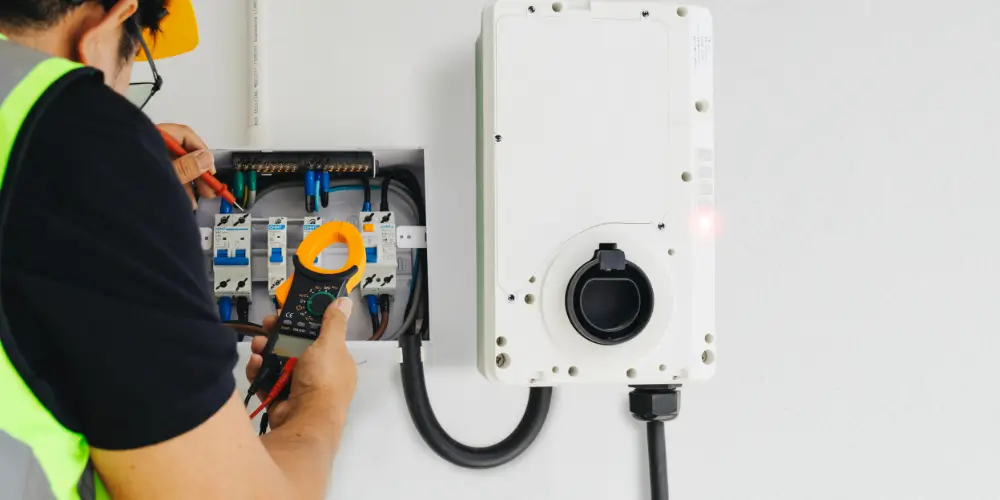
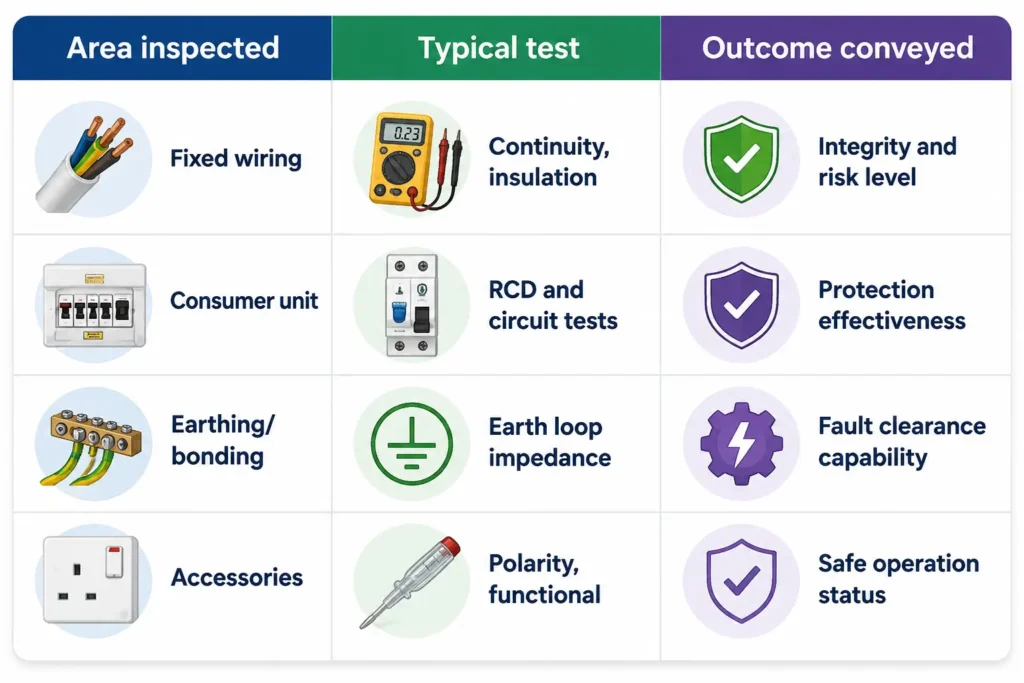
When evaluating an installation, an EICR systematically examines fixed wiring, consumer units, earthing and bonding, and associated accessories to verify safety and compliance with current regulations. The inspection covers visual checks and a suite of tests: continuity of protective conductors, insulation resistance, polarity, earth loop impedance, and RCD functionality. Documentation of circuit identification, load assessment and any deviations from expected arrangements is included. Recommendations distinguish between urgent remedial action and advisory improvements, allowing occupants to prioritise freedom of choice in repairs. The process balances thoroughness with minimal disruption, enabling informed decisions about upgrades or replacements.
EICR Codes and Abbreviations: What the Notes Mean
EICR notes use a compact set of codes and abbreviations to convey inspection findings efficiently; understanding these symbols helps owners and electricians interpret urgency, required actions and compliance status at a glance. The report commonly uses term abbreviations like S for satisfactory, F for further investigation needed, and observations coded as P(N) for potential non-compliance or D for deterioration. Standard test results appear as R1/R2 for RCD tests, Isol for isolation, and Earthing symbols indicating TN‑S, TN‑C‑S or TT system types. Circuit identifiers follow numbering for easy cross-reference, while appliance and point labels (e.g., HOB, SHWR, FCU) pinpoint locations. Time-stamped actions and dates use ISO-style shorthand. Short comments often pair with codes to specify remedial scope, parts required, or retest intervals. Familiarity with these compact notations streamlines decision-making and allows freedom to prioritise maintenance without misinterpreting the inspector’s intent.
C1, C2, C3: Urgency, Examples and Next Steps
Classify findings using the C1–C3 scale to indicate safety risk and required response: The report categorises defects so owners can act decisively and preserve autonomy. C1 denotes immediate danger; circuits must be made safe without delay. C2 indicates potentially dangerous conditions needing prompt attention to prevent escalation. C3 flags improvements or observations that do not present immediate risk but could be addressed to enhance safety and flexibility.
- C1: danger present isolate until qualified remedial work is completed
- C2: potentially dangerous arrange prompt corrective action to avoid hazard
- C3: improvement recommended plan upgrades when convenient
- Code not given: satisfactory at inspection no action required now
- Notes: prioritise based on risk, usage, and freedom to choose contractor
Each code guides owners on urgency and sensible next steps, enabling informed decisions that balance safety, liberty, and control without prescribing specific repair methods.
Typical Remedial Actions After an EICR: And Expected Timescales
Prioritise remedial work according to the defect code and site use: immediate isolation and certified repairs for C1 items, scheduled corrective work for C2 faults, and planned upgrades for C3 recommendations, with many typical interventions such as replacing damaged wiring, upgrading earthing or bonding, installing RCD protection, or renewing consumer units taking from a few hours to a couple of days depending on scope and access.
After an EICR, electricians assess site logistics, permit needs and occupant access to minimise disruption. Small repairs and RCD additions often conclude within a single visit; consumer unit replacements or extensive rewire sections may require phased work and temporary isolation, extending to one or two days. Where parts are unavailable or additional testing is needed, timescales can stretch to a week or more. Written estimates and a clear schedule empower occupants to accept or defer non-urgent work. Certificates and re-testing follow completion to confirm compliance and restore full freedom of use.
How Often to Get an EICR (By Property Type)
After remedial actions are completed and compliance is restored, attention turns to how often periodic inspections should be scheduled for different property types. Guidance balances safety, legal requirements and the occupant’s desire for minimal intrusion. Typical recommended intervals reflect risk and usage patterns: higher-risk or commercially used premises need more frequent checks, while private dwellings usually require longer gaps. Owners and managers who value autonomy should schedule inspections to match occupancy, equipment age and activity levels rather than default assumptions.
- Domestic (single-family homes): every 10 years, or sooner if rented or altered
- Houses in multiple occupation (HMOs): every 5 years due to shared facilities and turnover
- Commercial premises (offices, shops): typically every 5 years, depending on equipment load
- Industrial sites and construction: every 3 years, often more frequent if conditions are harsh
- Portable and special installations (e.g., caravans, temporary sites): inspection intervals vary; often annually
These intervals act as a baseline; adjustments should reflect actual risk and the occupant’s preference for control.

Who Can Issue a Valid EICR: And How to Check Qualifications
Although regulations set the minimum standards for who may issue an Electrical Installation Condition Report (EICR), the essential requirement is that the person or organisation be competent, suitably qualified, and insured to carry out periodic inspection and testing. Qualified electricians will typically hold relevant certifications (e.g. City & Guilds 2391 or 2394/2395) and be registered with bodies such as NICEIC, NAPIT or the ECA. Competence also means up-to-date training, public liability insurance and experience with UK wiring regulations (BS 7671).
Use checks to verify credentials and protect autonomy: request photo ID, certificates, registration numbers and proof of insurance before booking. Independent reviews and trade association membership add confidence but do not replace document verification.
| Qualification | Registration | Proof to Request |
| City & Guilds 2391 | NICEIC | Registration number |
| BS 7671 training | NAPIT | Certificates |
| Public liability insurance | ECA | Insurance policy copy |
How to Read Your EICR: Key Pages, Certificates and Responsibilities
An EICR’s cover page, schedules and summary provide the essential information needed to understand the electrical condition of a property: the cover page identifies the client, address, electrician and date; the Summary of Inspection and Testing gives the circuit-by-circuit condition, C1/C2/C3/F1/F2 classifications and any required remedial actions; and the schedules list individual test results, circuit details and observations that explain how each classification was reached. The reader should first locate the certificate section showing pass/fail and required completion dates for repairs. Responsibilities are clear: the electrician records findings and risk codes; the duty holder reviews and arranges remedial work; the property owner retains the report. Key pages include the executive summary, fault/failure details, and the signed declaration.
- Check the overall opinion and urgent C1/C2 items
- Note timescales for rectification and re-inspection
- Review individual circuit test values
- Confirm the electrician’s identity and signature
- Keep the EICR as an auditable record for freedom of compliance
Frequently Asked Questions
How Much Does an EICR Cost on Average in the UK?
On average, an EICR in the UK costs about £100–£300 for a standard domestic property; larger or older premises may incur £300–£600 or more, depending on size, complexity, and the electrician’s location and experience.
Can Tenants Request a Copy of the EICR Report?
Yes, tenants can request a copy of the EICR; landlords or agents are expected to provide it promptly. The tenant’s right supports transparency and safety, reinforcing tenants’ autonomy and informed decision-making about their home.
Does an EICR Cover Portable Appliance Testing (PAT)?
No an EICR does not cover PAT; it assesses fixed electrical installations. The auditor notes wiring, consumer units and earths. Portable appliance testing lies outside its remit and requires separate inspection and certification.
Are There Penalties for Landlords Without a Valid EICR?
Yes. Landlords face civil penalties, fines, and potential banning orders for lacking a valid EICR; local authorities may issue remedial notices, prosecute for noncompliance, and tenants can withhold rent or pursue legal remedies in severe cases.
Can an EICR Be Completed Remotely or via Photos?
No, an EICR cannot be completed remotely or solely via photos. The assessor must physically inspect and test circuits on-site to verify safety and issue a valid certificate; remote shortcuts would undermine legal and technical compliance.
Conclusion
An EICR What Is Included in an EICR Report? summarises the condition of an electrical installation, highlights safety defects and recommends remedial actions. It is a crucial compliance and safety document for landlords, employers and property owners, detailing inspection findings, coded observations (C1–C3), priorities and timescales. Issued by a qualified electrician or registered body, the report informs necessary repairs, ongoing maintenance and future inspection intervals. Clear understanding and timely action on its recommendations help reduce risk and guarantee legal obligations are met.
Need an EICR inspection in London?
Send your property details and we will help with price and appointment availability.
Related guides
An Electrical Installation Condition Report does not have one universal renewal period for every property. How often an…

How Long Does an EICR Inspection Take? An EICR typically takes about 1 hour for a small flat…

An EICR inspector examines the fixed electrical installation for safety and compliance, checking consumer units, fuses and protective…