
Electrical safety is one of the most important parts of keeping any property safe. Whether you own a home, rent out a property, or are planning to buy a house, you may come across the term EICR. But what is an EICR inspection, and why does it matter?
An EICR inspection is a professional electrical safety check that looks at the condition of the fixed electrical installation inside a property. It helps find faults, damage, wear and tear, and possible safety risks before they become serious problems. In this guide, we’ll explain what an EICR inspection is, what it includes, who needs one, how often it should be done, and what happens if the report shows problems.
Key Takeaways
- An EICR inspection checks whether a property’s fixed electrical installation is safe for continued use.
- It covers wiring, circuits, sockets, switches, consumer units, earthing, bonding, and signs of damage or overheating.
- Landlords in England usually need an EICR at least every 5 years.
- Homeowners are commonly advised to get an EICR around every 10 years, or sooner if there are warning signs.
- An unsatisfactory EICR means electrical issues need to be fixed by a qualified electrician.
Table of Contents
What Does EICR Stand For?
EICR stands for Electrical Installation Condition Report. It is a formal report given after a qualified electrician or electrical inspector checks the fixed electrical system in a property. This includes things like wiring, circuits, sockets, switches, consumer units, earthing, and bonding.
An EICR does not usually check portable appliances such as kettles, microwaves, or lamps. It mainly focuses on the fixed electrical installation that forms part of the property. The aim of an EICR inspection is simple. It checks whether the electrical installation is safe for continued use.

What Is an EICR Inspection?
An EICR inspection is a detailed electrical safety test carried out by a qualified and competent person. During the inspection, the electrician checks the condition of the electrical installation and looks for anything that could cause danger. This can include damaged wiring, overloaded circuits, faulty sockets, poor earthing, old consumer units, or signs of overheating.
After the inspection, the electrician gives you an EICR report. This report explains whether the electrical installation is satisfactory or unsatisfactory. It also lists any defects or recommended improvements. If the report is satisfactory, it means the electrical installation is safe for continued use at the time of testing. If it is unsatisfactory, it means some issues need to be fixed.
Why Is an EICR Inspection Important?
An EICR inspection is important because electrical faults can be dangerous. Faulty wiring or damaged electrical parts can increase the risk of electric shock, fire, and serious injury. Many electrical problems are not easy to see. A socket may look normal from the outside, but there could be loose wiring behind it. A circuit may work every day, but still be overloaded or unsafe.
An EICR helps identify these hidden problems. For landlords, an EICR is also important for legal compliance. Rental properties need to meet electrical safety rules, and landlords must be able to show that electrical checks have been carried out by a qualified person. For homeowners, an EICR gives peace of mind. It helps you understand the condition of your electrical system, especially if your property is older or you have not had the electrics checked for many years.
What Does an EICR Inspection Check?
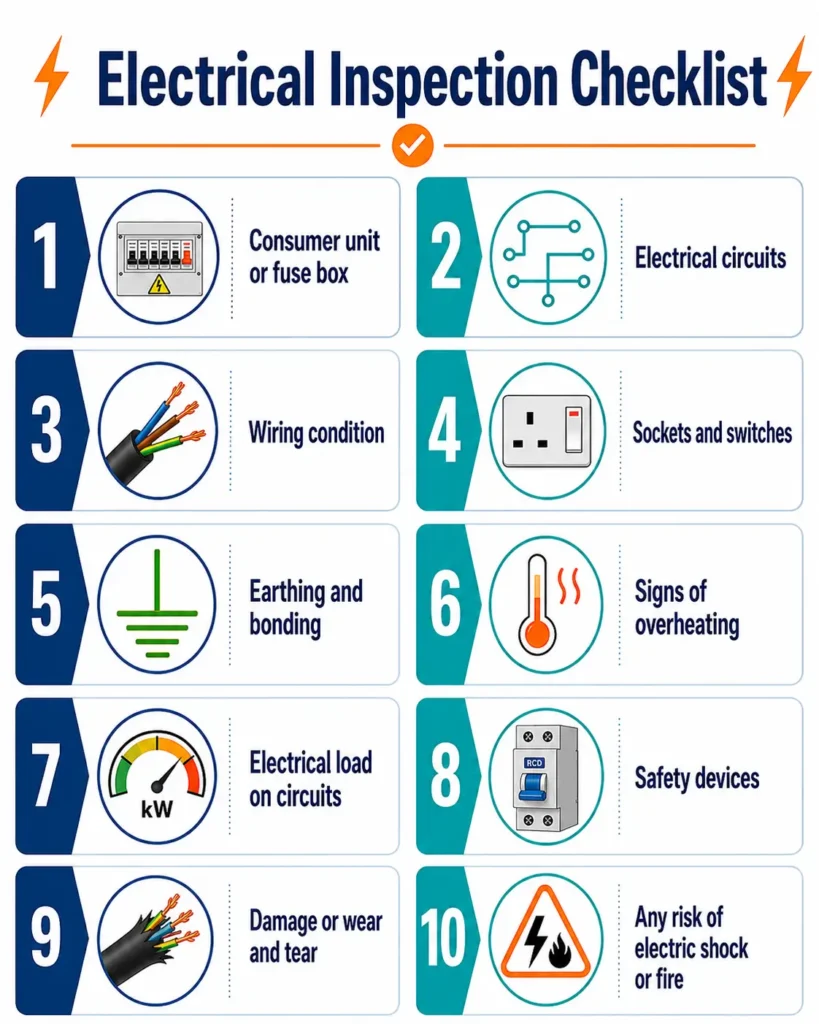
An EICR inspection checks the fixed electrical installation in a property. The electrician may inspect and test several parts of the system, including:
- Consumer unit or fuse box
- Electrical circuits
- Wiring condition
- Sockets and switches
- Earthing and bonding
- Signs of overheating
- Electrical load on circuits
- Safety devices
- Damage or wear and tear
- Any risk of electric shock or fire
The electrician will also check whether the installation meets current safety standards. Older installations may not always meet the latest standards, but that does not always mean they are unsafe. The report will explain which issues are serious and which are only recommended improvements.
Who Needs an EICR Inspection?
Different people may need an EICR inspection for different reasons.
Landlords
Landlords need EICR inspections to make sure their rental properties are electrically safe. In England, landlords must have electrical installations inspected and tested by a qualified person at least every 5 years.
A landlord may also need to give a copy of the report to tenants or local authorities when required.
Homeowners
Homeowners may not always have a legal duty to get an EICR, but it is strongly recommended for safety. If you live in your own home, an EICR can help you find electrical problems before they become dangerous. It is especially useful if your home is old, you have recently bought the property, or you are planning major renovation work.
Home Buyers
If you are buying a house, an EICR can help you understand the condition of the electrical system before you complete the purchase. It may also help you avoid unexpected repair costs after moving in.
Tenants
Tenants should know whether the property they live in has a valid electrical safety report. If you notice signs of electrical problems, such as burning smells, flickering lights, damaged sockets, or circuits that keep tripping, you should report them to your landlord.
Businesses
Businesses may also need regular electrical inspections to keep staff, customers, and visitors safe. Electrical safety is an important part of workplace safety.
How Often Should You Get an EICR?
How often you need an EICR depends on the type of property and how it is used. For rental properties in England, landlords must usually arrange an electrical inspection at least every 5 years. For owner occupied homes, a check every 10 years is commonly recommended for peace of mind.
However, an EICR may be needed sooner if:
- The property is old
- The wiring looks damaged
- The fuse box is outdated
- You are buying or selling the property
- There has been flood or fire damage
- Circuits trip often
- You smell burning near sockets or switches
- You are planning major electrical work
If you are unsure, it is best to speak to a qualified electrician.
What Happens During an EICR Inspection?
During an EICR inspection, the electrician will visually inspect the electrical installation and carry out tests on the system. Some parts of the electricity supply may need to be turned off while testing is done. The electrician will look for signs of damage, unsafe wiring, poor connections, incorrect installation, overheating, and other safety risks.
The length of the inspection depends on the size of the property, the number of circuits, and the condition of the installation. A small flat may take less time than a large house or commercial building. After the inspection, you will receive a written report showing the results.
What Do EICR Codes Mean?
An EICR report uses codes to explain the condition of the electrical installation. These codes help you understand how serious each issue is.
C1 Code
C1 means danger is present. This is the most serious code. It means there is an immediate safety risk and urgent action is needed.
C2 Code
C2 means potentially dangerous. This means there is a serious issue that could become dangerous. It needs to be fixed.
C3 Code
C3 means improvement is recommended. This does not usually make the report unsatisfactory by itself, but it shows that something could be improved.
FI Code
FI means further investigation is needed. This means the electrician has found something that needs more checking before a final decision can be made. If your report includes C1, C2, or FI codes, the EICR will usually be marked as unsatisfactory.
What Happens If an EICR Is Unsatisfactory?
If an EICR is unsatisfactory, it means the electrical installation has problems that need attention. The report will explain what the issues are and what type of work is needed. You should arrange for a qualified electrician to complete the required remedial work. Once the problems are fixed, you may receive written confirmation that the work has been completed.
For landlords, it is very important to act quickly if the report shows serious issues. Ignoring an unsatisfactory EICR can put tenants at risk and may lead to legal problems. For homeowners, fixing EICR issues helps protect your home, family, and property value.
How Much Does an EICR Inspection Cost?
The cost of an EICR inspection can vary depending on the size of the property, number of circuits, location, and electrician you choose. A small flat will usually cost less than a large house. A property with more circuits may take longer to inspect, so the price may be higher.
Before booking, ask for a clear quote and check what is included. The cheapest option is not always the best. You should choose someone qualified, experienced, and suitable for the type of property you own.
How to Choose the Right Electrician for an EICR
Choosing the right electrician is very important. An EICR should only be carried out by someone who is qualified and competent to inspect and test electrical installations.
Before booking, you can ask:
- Are you qualified to carry out EICR inspections?
- Do you have experience with this type of property?
- Will I receive a full written report?
- What is included in the price?
- How long will the inspection take?
- What happens if the report is unsatisfactory?
A professional electrician should be able to explain the process clearly and answer your questions.
Is an EICR the Same as an Electrical Certificate?
People often call an EICR an electrical certificate, but technically it is a report. It records the condition of the existing electrical installation at the time of inspection. An Electrical Installation Certificate is different. That is usually issued after new electrical installation work has been completed. An EICR checks an existing installation. An Electrical Installation Certificate confirms new work has been installed and tested.
Can You Sell a House Without an EICR?
In many cases, homeowners are not legally required to have an EICR before selling a house. However, having one can be useful. A recent EICR can give buyers more confidence in the property. It can also help avoid delays if the buyer asks questions about the condition of the electrics. If the report shows problems, you can choose to fix them before selling or be open with the buyer about the work needed.
Signs You May Need an EICR Inspection
You should consider booking an EICR if you notice any of these warning signs:
- Lights flicker often
- Sockets feel warm
- Switches are cracked or damaged
- The fuse box looks very old
- Circuits keep tripping
- You smell burning near electrics
- You hear buzzing from sockets or switches
- You have not had the electrics checked for many years
- You are buying a property
- You are renting out a property
Electrical problems should never be ignored. If something seems unsafe, contact a qualified electrician as soon as possible.
Final Thoughts
An EICR inspection is an important electrical safety check for homes, rental properties, and businesses. It helps identify faults, damage, wear and tear, and possible safety risks in the fixed electrical installation. For landlords, EICR inspections are a key part of meeting electrical safety responsibilities. For homeowners, they provide peace of mind and help keep the property safe.
If your property has not had an electrical inspection for many years, or if you are unsure about the condition of the wiring, booking an EICR is a sensible step. A safe electrical system protects people, property, and peace of mind.
FAQs About EICR Inspections
What does EICR mean?
EICR means Electrical Installation Condition Report. It is a report that shows the condition of a property’s fixed electrical installation.
Who can carry out an EICR inspection?
An EICR should be carried out by a qualified and competent electrician or electrical inspector.
How long does an EICR inspection take?
The time depends on the size of the property and the number of circuits. A small flat may take less time than a large house or commercial building.
Is an EICR required for landlords?
Yes, landlords in England usually need to have electrical installations inspected and tested at least every 5 years by a qualified person.
Do homeowners need an EICR?
Homeowners may not always be legally required to get an EICR, but it is recommended for safety and peace of mind.
What happens if an EICR fails?
If an EICR is unsatisfactory, the report will list the problems. You should arrange for a qualified electrician to fix the required issues.
Does an EICR check appliances?
An EICR mainly checks the fixed electrical installation, such as wiring, sockets, switches, circuits, and the consumer unit. Portable appliances are usually checked separately.
How much does an EICR cost?
The cost depends on property size, location, and the number of circuits. Always ask for a clear quote before booking.
How long is an EICR valid?
For rental properties in England, an EICR is usually required at least every 5 years. Homeowners are commonly advised to have checks around every 10 years.
Is an EICR worth it?
Yes. An EICR helps find hidden electrical risks and gives you a clear picture of your property’s electrical safety.
Conclusion
An EICR inspection is one of the most reliable ways to check whether a property’s electrical installation is safe for continued use. It helps identify hidden faults, damaged wiring, overloaded circuits, poor earthing, and other risks that may not be visible during normal use. For landlords, a valid EICR supports legal compliance and helps protect tenants. For homeowners and buyers, it gives a clear understanding of the property’s electrical condition and helps prevent costly or dangerous issues later. If your property has not had an electrical safety check for several years, or you have noticed warning signs such as tripping circuits, warm sockets, burning smells, or flickering lights, arranging an EICR inspection with a qualified electrician is a sensible and safe step.
Need an EICR inspection in London?
Send your property details and we will help with price and appointment availability.
Related guides
An Electrical Installation Condition Report does not have one universal renewal period for every property. How often an…

What Is Included in an EICR Report? An EICR report records the condition of a property’s fixed electrical…

How Long Does an EICR Inspection Take? An EICR typically takes about 1 hour for a small flat…