
How Long Does an EICR Inspection Take? An EICR typically takes about 1 hour for a small flat to a full day for large or multi-occupancy properties, with most domestic homes completed in 1–6 hours, depending on size and complexity. Time depends on the installation age, wiring layout, additional features such as EV chargers, and access to consumer units. Inspectors combine visual checks, circuit tracing and tests, and may document on-site; follow-up repairs add time. Continue for practical tips and detailed time estimates.
Key Takeaways
- Typical EICR duration varies by property size, usually 1–6 hours, with larger homes taking longer.
- One-bedroom flats often take 1–2 hours; 2–3-bedroom houses, 2–3 hours; 4+ bedroom homes, 4–6+ hours.
- Key tasks include visual inspection, consumer unit check, circuit tracing, insulation/continuity tests, and RCD/functional tests.
- Preparation clear access, previous EICRs, and unplugged equipment speeds up the inspection and reduces delays.
- Allow buffer time for faults or follow-ups; inspectors complete documentation on-site or shortly after the visit.
Table of Contents
How Long Does an EICR Inspection Usually Take?
What an EICR inspection is takes depends primarily on the property’s size and complexity, but typical durations range from 1 to several hours. The inspector moves methodically through accessible circuits, testing sockets, switches, fixed appliances and protective devices, recording results and noting any shrouded access or required follow-up. For a single domestic dwelling with straightforward wiring, the process tends to be on the shorter end; multi-room homes with multiple consumer units or numerous fixed installations require more time. The inspector balances thorough testing with minimal disruption, aiming to restore normal use quickly. Documentation is completed on-site or immediately afterward, depending on the workflow. Clients who value autonomy appreciate clear timing estimates and concise reports that enable informed decisions about repairs or scheduling. Expectations are set in advance where possible, and inspectors communicate if unforeseen complications extend the visit, preserving clarity and control for occupants.

Key Factors: Age, Wiring Complexity, and Time Impact
Beyond property size and layout, the age of the installation and wiring complexity strongly influence inspection duration. Older installations often lack accessible labeling, use legacy materials, or feature non-standard routing that requires careful tracing and testing. Inspectors spend extra time identifying circuits, verifying bonding and earthing arrangements, and checking for deterioration such as degraded insulation or obsolete consumer units.
How Long Does an EICR Inspection Take? Complex wiring, multiple radial circuits, abundant spurs, integrated lighting control systems, or extensive data/low-voltage cabling add tasks such as isolating circuits, performing insulation resistance and continuity tests, and confirming protective device coordination. Add-ons like external electrical systems, outbuildings, or EV chargers extend the inspection scope.
Properties seeking flexibility appreciate concise reporting and clear defect categorisation; inspectors accustomed to such expectations allocate time for focused diagnostics and essential remedial advice rather than exhaustive exploration. Ultimately, inspection time scales with the effort needed to reach confident, freedom-minded conclusions about safety and compliance.
Typical EICR Timeframes By Property Size
Although inspection time varies with specific conditions, standard benchmarks by property size provide a useful starting point. A one-bedroom flat typically requires about 1–2 hours for a competent electrician to complete an EICR, allowing time for basic testing and documentation. Small houses (two to three bedrooms) typically take 2–3 hours, due to additional circuits and rooms. Medium-sized homes (three to four bedrooms) often take 3–4 hours, due to the need for more sockets, switches, and consumer unit access.
Larger properties, including four-plus-bedroom houses or homes with multiple outbuildings, generally require 4–6 hours or more, depending on layout and accessibility. HMOs and multi-occupancy dwellings can extend further, often scheduled as half-day to full-day visits to cover individual circuits and separate meters. These benchmarks assume reasonably accessible wiring and no major remedial work. Clients seeking scheduling freedom may plan around these windows, allowing inspectors flexibility while ensuring efficient completion and timely certification.
What An Inspector Checks: And How Long Each Step Takes
When conducting an EICR, the inspector follows a systematic sequence of visual checks and electrical tests to assess safety and functionality; each step has a typical time range that varies with the property’s complexity. The inspector begins with external and consumer unit inspections, then moves to circuit identification, continuity and insulation testing, and functional tests of RCDs and protective devices. Time per step depends on circuit count and access; efficient planning preserves occupants’ freedom and minimises disruption.
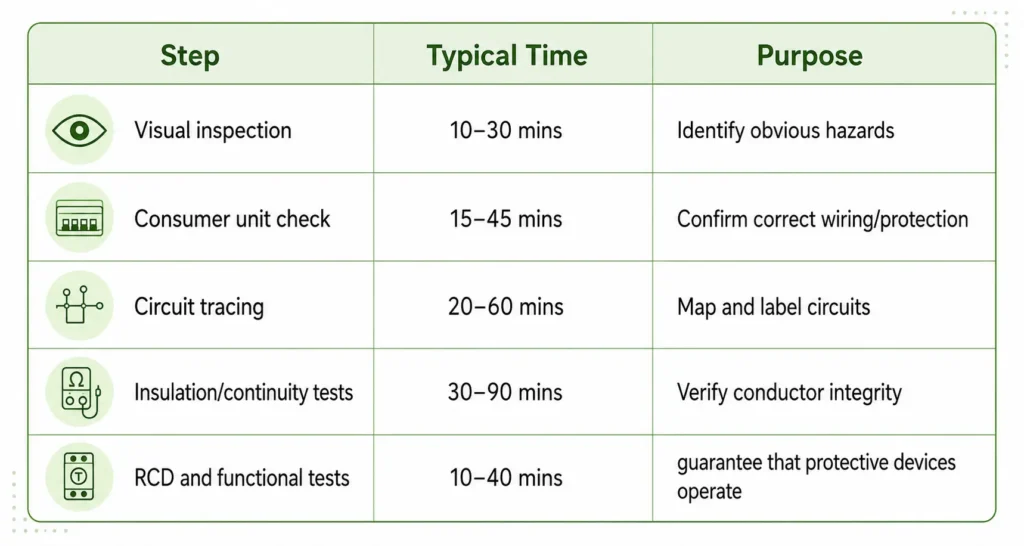
Summary: timings scale with property size, complexity and accessibility; inspectors adapt methods to balance thoroughness and minimal intrusion.
Time Added For Remedial Work And Re-Inspections
If remedial work is required after an EICR, additional time must be scheduled for repairs and any subsequent re-inspections, and that added duration depends on the number and severity of faults, accessibility of affected wiring or accessories, and whether parts or specialist contractors are needed. Typically, minor faults, such as replacing sockets or tightening connections, can be resolved in a few hours to a day. Moderate issues, such as replacing consumer units, rerouting cables, or correcting earthing, often take 1 to 3 days. Major works involving structural access, extensive rewiring, or coordination with other trades can extend to a week or more. Once remedial actions are complete, a re-inspection is usually brief: a focused check of repaired items plus any affected circuits, commonly lasting 30 minutes to two hours. Scheduling flexibility benefits the property owner; having realistic windows for remedial teams and inspectors minimizes delays and preserves freedom to plan around the work.
How To Prepare For An EICR To Speed The Visit
Prepare the property by making access straightforward and information readily available, so the electrician can work efficiently and complete the EICR more quickly. The owner should clear routes to the consumer unit, meter, loft, and any outbuildings. Confirm lighting and key areas are unobstructed; remove furniture, stored items, and locked cases that block sockets, switches, or distribution boards.
Gather documentation of previous EICRs, installation certificates, and wiring diagrams and place them where the inspector can quickly review them. Provide clear access instructions, keys, or codes for gated areas and confirm parking for the electrician’s vehicle. Label circuits if known, and list unusual installations such as EV chargers or solar inverters.
Communicate preferred time windows and any occupant mobility constraints ahead of the visit. Where possible, arrange for responsible occupants to be present to answer questions. These steps reduce delays, afford the electrician autonomy to work without interruption, and help deliver a timely, thorough inspection.
Common Causes Of Delay And How To Avoid Them
Having access and documentation in order greatly reduces holdups, but several common issues still slow EICR visits. Inspectors often encounter blocked access to consumer units, obscured sockets, or locked rooms; each requires extra time to gain entry or rearrange furniture. Missing or incomplete papers, previous EICRs, circuit diagrams, or landlord contact details force on-site verification and follow-up. Noncompliant installations, like concealed spurs, shared neutrals, or unsafe DIY work, require more detailed testing and reporting. Faulty or absent labeling extends circuitry tracing. Unavailable occupants cause repeats or waits. Poor lighting and cramped spaces impede inspection speed and accuracy.
Avoidance centers on proactive, minimal-effort measures: guarantee clear physical access, disclose known alterations, collate documentation, and label circuits when possible. For shared properties, coordinate access permissions in advance. These straightforward steps preserve inspectors’ time and support a faster, freer process for owners and tenants alike.

Scheduling Tips: What To Tell Tenants And How To Budget Time
When arranging an EICR, landlords and agents should provide tenants with clear, concise instructions on access, expected duration, and simple preparations to ensure inspections proceed smoothly. Typical domestic checks take between one and three hours, depending on property size and reported issues, while larger or complex premises can require a full day. Notices should state the arrival window, ID requirements, and any rooms or consumer units that must be accessible. Tenants appreciate concise options and the freedom to choose convenient slots; offer two time windows and confirm by text or email. Allow a contingency buffer for unforeseen faults or follow-up tests when planning the day.
- Suggest tenants move pets, clear access to fuse boxes, and unplug sensitive equipment.
- Recommend a flexible three-hour booking for small homes, a half-day for larger flats, and a full day for older or commercial conversions.
- Communicate costs, expected outcomes, and next steps so tenants can plan with confidence.
Frequently Asked Questions
How Much Does an EICR Inspection Typically Cost?
An EICR inspection typically costs between £100 and £300 for standard residential properties; the cost varies by size, age, and findings. Freedom-seeking homeowners may shop competitively, prioritising qualified electricians and clear, independent reports.
Are Landlords Legally Required to Provide an EICR Certificate?
Yes. The law requires landlords to obtain and provide an EICR to tenants in most rental situations; the responsible party must supply the certificate upon request and maintain records to ensure electrical safety and regulatory compliance.
Can Tenants Be Present During the EICR Inspection?
Yes, tenants may be present during the EICR inspection if the landlord permits. The electrician conducts the assessment independently; tenants should avoid interference, respect safety instructions, and allow access to all areas for a complete, lawful inspection.
Will the Inspector Need Access to Tenants’ Locked Rooms?
Yes. The inspector will require access to tenants’ locked rooms to test fixed wiring and outlets. The property manager must arrange consent or lawful access; tenants retain privacy rights but should cooperate to guarantee a complete, safe inspection.
Does an EICR Cover Portable Appliance Testing (PAT)?
N: An EICR does not include PAT. It assesses fixed electrical installations only. The inspector notes unsafe installed equipment, but portable appliance testing is separate and should be arranged independently to guarantee tenant safety and compliance.
Conclusion
In conclusion, How Long Does an EICR Inspection Take? An EICR’s duration varies with property size, age and wiring complexity, typically ranging from under an hour for single rooms to several hours for larger homes or commercial sites. Inspectors methodically test circuits, check consumer units and look for deterioration, with additional time needed for remedial work and re-inspections. Preparation and clear access speed the process, while tenant cooperation and accurate scheduling minimise delays and help guarantee timely, cost-effective completion.
Need an EICR inspection in London?
Send your property details and we will help with price and appointment availability.
Related guides
An Electrical Installation Condition Report does not have one universal renewal period for every property. How often an…

What Is Included in an EICR Report? An EICR report records the condition of a property’s fixed electrical…

An EICR inspector examines the fixed electrical installation for safety and compliance, checking consumer units, fuses and protective…