
What Happens During an EICR Inspection in the UK includes both visual checks and electrical tests on a property’s fixed electrical installation. The electrician inspects consumer units, wiring, sockets, switches, and earthing for damage, overheating, or poor connections. Tests include continuity, insulation resistance, polarity, earth electrode resistance, and RCD performance. Findings are coded C1, C2, C3, or FI, with remedial actions prioritised for safety. A formal report and recommended timescales follow, with further detail available for next steps and costs.
Key Takeaways
- The electrician conducts a visual inspection of consumer units, wiring, sockets, switches and accessible fixed installations for damage or unsafe alterations.
- Tests include continuity, insulation resistance, polarity, ring main checks, earth electrode resistance, and RCD trip/function testing.
- Circuits may be isolated and temporarily de-energised, so lighting or sockets can be unavailable during testing.
- Findings are recorded using codes (C1: immediate danger, C2: potentially dangerous, C3: improvement, FI: further investigation) and explained to the client.
- A formal EICR report outlines defects, required remedial actions, suggested timescales, and documentation for compliance and follow-up.
Table of Contents
Do You Need an EICR? Who Must Have One
What Happens During an EICR Inspection is important to understand, but who needs an Electrical Installation Condition Report depends on property use and legal obligations. Landlords of private and social rented housing must provide safe electrical systems and typically require an EICR at tenancy change or every five years, or sooner if specified. Businesses and public sector premises follow safety regulations and may need periodic inspections based on risk, equipment, and industry-specific rules.
Owners of rented properties, including holiday lets, should arrange inspections to maintain compliance and tenant safety. Commercial operators, especially those with high electrical loads or specialised machinery, benefit from routine EICRs to manage operational risk.
Occupiers of communal residential buildings and facilities serving vulnerable people face stricter expectations and enforcement. Private homeowners are not universally required to obtain an EICR but are advised to seek one when purchasing, after significant work, or if ageing wiring raises concerns. Ultimately, deciding to commission an EICR balances legal duty, risk tolerance, and the desire for assurance and autonomy over one’s property.

Prepare Your Property for an EICR
After deciding that an EICR is required, property owners should prepare the site to guarantee a smooth, efficient inspection. The occupant or manager clears access to consumer units, distribution boards, and sockets, ensuring panels are reachable without delay. Relevant documentation, previous reports, circuit plans, and tenancy records should be assembled for the electrician. Removing heavy obstructions and securing pets reduces interruptions and risk. Where multiple dwellings exist, labels for flats and meters quicken diagnostics.
- Provide unobstructed access to fuse boxes and meter cupboards
- Gather prior electrical paperwork and tenancy information
- Label circuits, meters, and individual flats where applicable
- Make certain that lighting and socket circuits can be powered during testing
- Secure pets and remove large furniture blocking access
Clear, organised preparation respects the inspector’s time and reduces inspection duration. This approach supports occupants’ autonomy by minimising disruption and enabling a prompt, accurate assessment without needless constraint.
What Your Electrician Will Check Visually
When conducting the visual portion of an EICR, the electrician systematically inspects accessible fixed wiring, consumer units, sockets, switches and protective devices for signs of damage, deterioration or non-compliance. They note loose connections, frayed insulation, exposed conductors and evidence of overheating or burning. Consumer units are checked for correct labeling, secure enclosures and absence of corrosion or water ingress. RCDs, circuit breakers and fuses are examined to confirm correct ratings, intact covers and obvious functional markings. Accessible earthing and bonding conductors receive attention for continuity indications and secure terminations. Light fittings, switches and visible cable routes are reviewed for inappropriate or unsafe alterations, amateur repairs and unprotected cables. External wiring and isolation points are observed where reachable. The electrician records any non-compliant work, potential fire risks or items requiring further investigation, enabling occupants to maintain electrical freedom through informed remedial actions and prioritised safety improvements.
What Electrical Tests Are Performed in an EICR
Several specific electrical tests are carried out during an EICR to verify the safety and integrity of circuits and protective measures. The inspector follows a methodical regime to confirm compliance and detect hidden faults, focusing on measurable parameters rather than opinions. Tests establish that circuits will operate safely under fault conditions and that protective devices will interrupt faults reliably.
- Continuity of protective conductors and bonding verifies that earth paths are intact.
- Insulation resistance tests: check cable insulation between live conductors and earth.
- Earth electrode resistance (where applicable): measures the effectiveness of the installation’s connection to earth.
- Polarity and ring continuity checks confirm correct wiring and intact ring circuits.
- Operation of RCDs and protective devices: validates trip times and sensitivity to fault currents.
Results are recorded objectively, with values compared against standards. The process empowers occupants to act on factual findings and make informed choices about remedial work.
Fault Codes Explained (C1, C2, C3, FI) : What to Do Next
Fault codes on an EICR C1, C2, C3 and FI classify the severity and required response for identified electrical issues. C1 denotes an immediate danger; action must be taken without delay, and the affected circuit or equipment should be isolated. C2 indicates a potentially dangerous condition that requires prompt attention by a competent electrician; the client is advised to arrange repairs soon. C3 denotes improvement recommended: not immediately unsafe but worth addressing to enhance safety and reliability when convenient. FI (further investigation) flags unclear or suspect conditions needing more detailed examination before a definitive code and remedial plan are set. The report should state specific locations and suggested remedies; the responsible person can choose a qualified contractor to complete the works.
Documentation of repairs and reinspection, where required, restores confidence and evidences compliance. Clear, decisive steps preserve freedom of use while protecting occupants and property.
EICR Inspection Timescales and How Long It Takes
Typical EICR inspections for domestic properties generally take between 1.5 and 4 hours, depending on property size, complexity and the presence of certificated accessories; commercial or multi-occupied buildings can require a full day or more. The inspector works methodically: visual checks, circuit identification, insulation resistance and continuity testing, and verification of protective devices. Time varies with access, documentation availability and the number of circuits.
Factors that influence duration include:
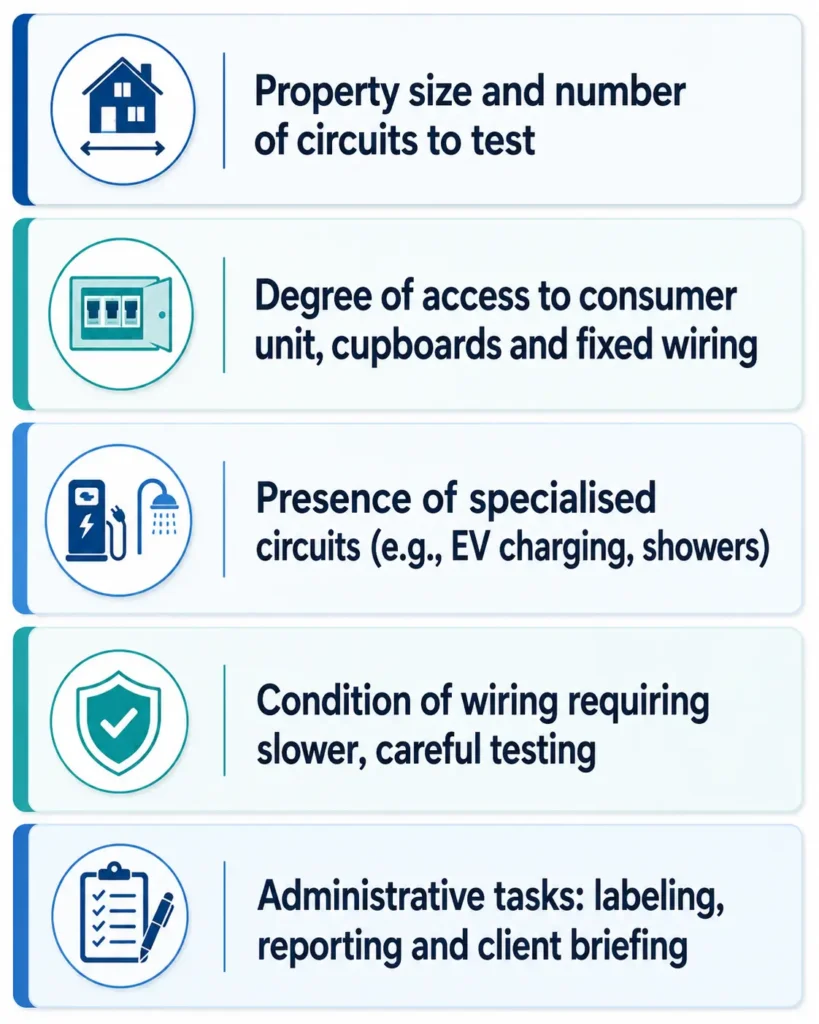
Inspections aim to be thorough yet unobtrusive, allowing occupiers freedom to use spaces when safe. Clients receive a clear timeframe estimate beforehand. Where limitations occur, the report will note them and recommend follow-up or re-inspection to confirm compliance.
EICR Remedial Costs: Typical Fixes and Price Drivers
When an EICR identifies non-compliances, remedial work ranges from straightforward replacements of sockets and fuses to more involved rewiring or consumer unit upgrades, with costs driven by the scope of repairs, labour rates, access difficulty and the need for certification or re-testing. Typical fixes include replacing damaged sockets, correcting earthing and bonding faults, upgrading outdated wiring, and installing RCD protection. Minor repairs socket swaps, fuse changes, tightened connections are relatively cheap and quick. Intermediate jobs, such as partial rewire, adding new circuits or replacing a consumer unit, increase labour and material costs. Major interventions, including full rewire or extensive trunking work, are the most expensive. Price drivers include electrician experience, regional labour variations, time required, materials quality, and access complexity (walls, lofts, floorboards). Emergency or out-of-hours work attracts premiums. Freedom-minded occupants often prioritise transparent itemised quotes, options for phased work, and clear timelines to control costs while ensuring compliance and safety.
The EICR Report: Reading Results and the Next Steps
After remedial work options and cost drivers have been considered, attention turns to interpreting the EICR itself and deciding the practical next steps. The report lists codes: C1 (danger present), C2 (potentially dangerous), C3 (improvement recommended) and FI (further investigation). A reader seeking autonomy prioritises clear actions: urgent fixes, scheduling competent contractors, or documenting a decision to monitor. Decisions hinge on risk, budget, and desired independence.
- Review C1 and C2 items first and plan immediate remediation.
- Evaluate C3 items for phased upgrades aligned with financial freedom goals.
- Commission quotations from certified electricians for FI and remedial work.
- Keep records: report copies, invoices, and completion certificates for compliance.
- Set a review interval based on system age and usage, not just statutory prompts.
The report converts inspection data into a roadmap. Choices should favour transparent timelines, costed options, and ownership of safety responsibilities.
Frequently Asked Questions
How Long Does an EICR Certificate Remain Valid for Different Property Types?
An EICR typically remains valid for up to five years for most domestic properties; three years for rented or higher-risk premises; shorter if advised by the electrician, and immediately voided if significant changes or hazards are discovered.
Can Tenants Request or Receive a Copy of the EICR Report?
Yes. Tenants can request and receive a copy of the EICR report; landlords or agents must provide it promptly, respecting tenants’ right to safety and transparency, unless legitimate legal reasons prevent immediate disclosure.
Will an EICR Inspection Affect My Home Insurance Premiums?
An EICR itself seldom raises premiums; a clean report can reassure insurers and potentially prevent increases, while findings of defects left unremedied might prompt higher premiums or refusal prompt remedial action preserves freedom and insurer confidence.
Are Portable Appliance Tests (PAT) Included in an EICR?
No, an EICR does not include PAT testing. The inspector assesses fixed electrical installations and wiring. Portable appliance tests are separate checks on movable devices, typically performed by a competent technician under a distinct testing schedule.
Can an EICR Be Performed Remotely or via Photos/Videos?
No, an EICR cannot be done remotely or via photos/videos. The inspector must perform on-site, hands-on testing and verification of circuits, continuity, insulation resistance and protect ive devices to guarantee accurate, lawful safety assessment.
Conclusion
What Happens During an EICR Inspection provides an essential assessment of an installation’s safety and compliance, guiding property owners on required actions. Landlords and some homeowners need one, while preparation and a competent electrician help ensure an efficient inspection. Visual checks and electrical tests identify C1, C2, C3, and FI issues, with remedial work varying in scope and cost. Reports set remedial timescales and priorities. Promptly addressing faults preserves safety, meets legal obligations, and maintains the confidence of landlords and occupants in the electrical system.
Need an EICR inspection in London?
Send your property details and we will help with price and appointment availability.
Related guides
An Electrical Installation Condition Report does not have one universal renewal period for every property. How often an…

What Is Included in an EICR Report? An EICR report records the condition of a property’s fixed electrical…

How Long Does an EICR Inspection Take? An EICR typically takes about 1 hour for a small flat…